
If you have ever sat at a Masai Mara National Reserve gate at 6:15pm watching the light turn gold and known your guide has to turn the vehicle around, you already understand the frustration. This guide covers night game drive Kenya conservancies: which ones allow it, what it costs, and how to book it. Kenya’s national parks close at dusk. No exceptions, no permits, no side deals. But a short drive away, in private conservancies, that same golden hour turns into something else: a night game drive, spotlight in hand, genets and aardvarks moving through the beam.
For photographers, this matters more than it sounds. Night drives are where you get the shots nobody else has, a leopard’s eyes catching red-filtered light, a bat-eared fox frozen mid-step. But they only happen in specific places, under specific rules, and at a real cost. Here is what actually applies in 2026.
Why Night Game Drives Are Banned in National Parks and Reserves
Kenya Wildlife Service manages the country’s national parks, and it enforces a strict gate-to-gate rule: no vehicle movement between roughly 6:30pm and 6:00am. The Masai Mara National Reserve, run separately by the Narok County Government, follows the same practice even though it is not technically a KWS property.
The reasoning is threefold. First, safety. Driving off-track in the dark near predators and unmarked terrain is genuinely risky. Second, anti-poaching control. Restricting vehicle movement after dark makes it easier for rangers to tell a tourist vehicle from a poacher’s. Third, animal welfare. Many nocturnal species hunt or rest undisturbed once vehicle noise and headlights disappear, and wildlife authorities want to protect that window.
Private conservancies operate under different management and lower visitor density, so they set their own rules, usually with far fewer vehicles per square kilometer than the reserve itself.
Night Game Drive Kenya Conservancies: The Full List
Two clusters stand out. Around the Masai Mara, conservancies like Mara North Conservancy, Naboisho Conservancy, Olare Motorogi Conservancy, and Ol Kinyei Conservancy all permit night drives for guests staying at camps inside the conservancy boundary. These conservancies were set up as community land leases, so the same landowner agreements that limit vehicle numbers also give camps the flexibility to run after-dark drives.
Further north, Laikipia conservancies like Ol Pejeta and Lewa run some of the most established night drive programs in the country. Ol Pejeta Conservancy, about 200 km and a three-to-three-and-a-half-hour drive from Nairobi, has offered night drives for over a decade. Lewa Wildlife Conservancy, roughly 280 km from Nairobi near Isiolo, restricts the activity to guests at select partner lodges.
Ol Pejeta vs Lewa vs the Mara Conservancies
Pricing across operators is usually quoted as a vague range. Here is what each conservancy actually charges, based on published 2025-2026 rates. Figures marked “indicative” vary by camp and season, so confirm before booking.
| Conservancy | Region | Distance from Nairobi | Night Drive Price | Minimum Stay Required |
|---|---|---|---|---|
| Ol Pejeta Conservancy | Laikipia | ~200 km, 3-3.5 hr drive, or 35-min flight to Nanyuki | $70 per person, per two-hour slot (7-9pm or 9-11pm) | 1 night at a partner camp |
| Lewa Wildlife Conservancy | Laikipia/Isiolo | ~280 km, 5 hr drive, or 45-min flight to Lewa Downs | $50-70 per person, indicative | 2 nights at select lodges |
| Mara North Conservancy | Greater Mara | ~270 km, 5.5-6 hr drive, or 45-min flight to Mara North airstrip | $50-70 per person, often bundled into the nightly rate | 2 nights at a conservancy camp |
| Naboisho Conservancy | Greater Mara | ~270 km, similar flight time to Mara North | $50-70 per person, indicative | 2 nights at a conservancy camp |
| Masai Mara National Reserve | Greater Mara | ~270 km, 5.5-6 hr drive, or 45-min flight | Not permitted | Not applicable |
Ol Pejeta’s fee is separate from its conservancy entry fee, which runs around $100 per adult per 24 hours as of early 2026. The Mara conservancies typically fold the night drive into the camp’s nightly rate, which is why quotes there look higher on paper but include more.
What You Might See After Dark
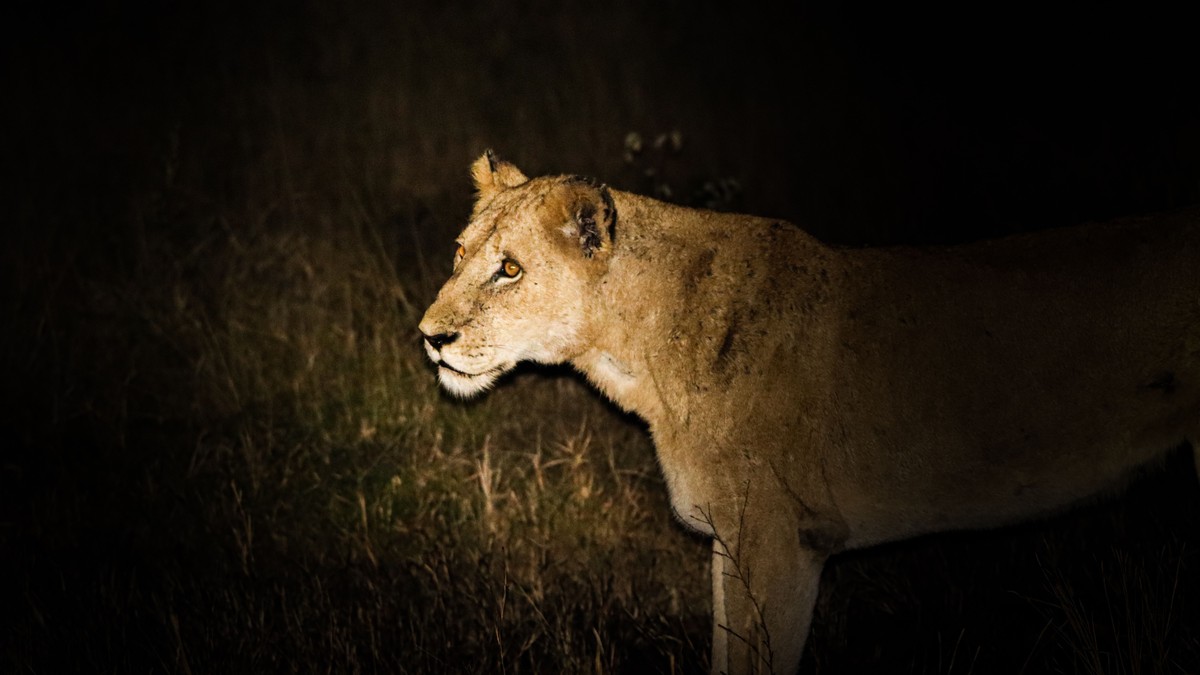
Daytime drives favor lions, elephants, and the big cats everyone photographs. Night drives flip the cast. Expect genets draped along tree branches, aardvarks digging for termites, bat-eared foxes trotting in pairs, and the occasional civet or white-tailed mongoose. Ol Pejeta’s population of black and white rhino also feeds at night, and leopards, largely nocturnal hunters, are far more active after 8pm than at any point during the day.
Owls, nightjars, and the occasional serval round out a good night’s sightings. None of this is guaranteed, since nocturnal species move less predictably than daytime grazers, but the odds of an unusual sighting are genuinely higher after dark.
How a Night Drive Actually Runs
Most operators run two slots. Ol Pejeta offers 7-9pm and 9-11pm drives, timed so guests can still make dinner or sleep at a reasonable hour. Mara conservancy camps usually run a single after-dinner drive, departing around 8:30pm and returning by 10:30pm.
A guide and a dedicated spotter usually ride together, the spotter sweeping a handheld light across the bush while the guide drives slowly, often under 15 km per hour off-track. Photographers should expect long stretches of nothing followed by a sudden, brief sighting. Patience matters more here than on a daytime drive.
Spotlighting Rules That Protect Wildlife
Reputable operators use red or amber filtered spotlights rather than plain white beams. Red light is less disruptive to an animal’s night vision and less likely to spook a hunting predator mid-stalk. Most conservancies cap spotlight time on any single animal at one to two minutes and require a minimum viewing distance, typically 20 to 30 meters for predators.
For photographers, this changes your gear plan. A red filter shifts color temperature significantly, so shoot in RAW and expect to correct white balance afterward. Fast lenses (f/2.8 or wider) and higher ISO settings, often 3200 and above, are standard for usable night drive images.
Day Trip or Overnight? The Real Trade-off
This is the detail most guides skip. If you are booking a Masai Mara day trip from Nairobi, you will not get a night drive, full stop. Day trippers enter the national reserve, not the conservancies, and gates close before dusk regardless of arrangement.
To access a night drive at Mara North, Naboisho, or Olare Motorogi, you need at least one, usually two, nights booked at a camp physically inside that conservancy. Ol Pejeta is more flexible. Because it sits on public road access near Nanyuki, some day visitors staying at nearby non-conservancy lodges can still book a single night drive slot, though camps located inside Ol Pejeta make logistics far simpler.
Packing for a Night Drive
Bring a headlamp with a red-light mode so you do not blind your own night vision or your fellow guests. Pack a fleece and a windproof layer. Temperatures in the Mara and Laikipia can drop to 12°C after 9pm even in July and August. A beanbag or small tripod helps stabilize long exposures on a moving vehicle, and a lens cloth is essential once dew starts settling on your gear.
If you are new to Kenya safaris generally, it is worth reading through common first-time safari mistakes before you go. Underpacking for cold nights is one of the most frequent ones.
Is It Safe, and Is It Right for Kids?
Night drives are run with trained guides, low speeds, and radio contact with camp. Vehicles stay on established tracks in most conservancies, reducing the terrain risk that worries people most. That said, most operators set a minimum age, commonly 8 to 12 years old, since the drives run late and involve sitting quietly for long stretches. Check the age policy directly with the specific camp before booking for a family with younger children.
The Valley Safaris Difference
We build night drives around camps that actually deliver, not just ones that advertise the activity. That means checking, camp by camp, whether the minimum stay provides a genuine spotlighting experience or just a token 30-minute add-on. We also flag the day-trip trap early: if a Mara night drive matters to you, we will not let you book a day trip by mistake and find out too late that the gates close before dark. For photographers specifically, we match you with guides who know how to position the vehicle for a clean shot, not just a quick sighting.
Ready to See Kenya After Dark?
A good night game drive takes planning, the right conservancy, the right camp, and the right number of nights. Get in touch through our contact page and we will build an itinerary around it, timed to your photography goals and the season you are traveling in.